

Garment Manufacturers in India for German Brands (2026)
Published: 25 November 2026 · By Riya Agarwal
If you want to import clothes from India to Germany, shortlist manufacturers against a real style, ask for a sample in the intended fabric and have your customs broker price that garment under the EU tariff. As of November 2026, the EU and India have concluded their trade negotiations, but the new agreement is not yet in force. Many Indian garments can already qualify for a lower duty under the EU’s separate GSP preference scheme.
Why choose an Indian garment manufacturer for a German brand?
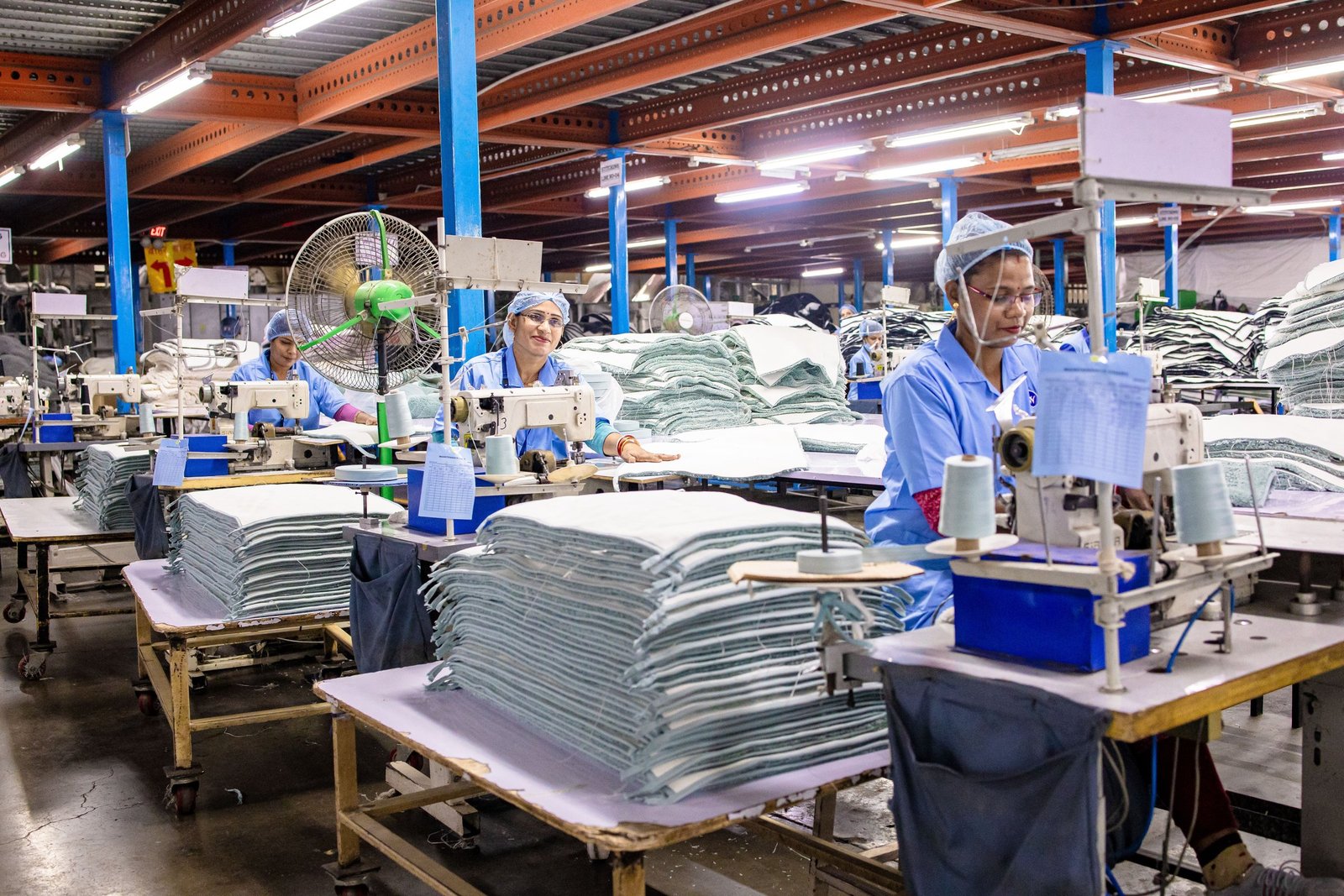
Suppose you are developing a cotton shirt with an embroidered pocket. You need someone to find the right cloth, cut the shirt so the pocket sits level and get the embroidery to lie flat after washing. An Indian supplier that can coordinate fabric sourcing, sampling and embroidery under one roof gives you one place to take the whole problem. Ask to see those operations come together in your own sample. A photograph of a beautifully embroidered swatch tells you little about how the finished pocket will hang.
For a first collection, start with the quantity you can actually sell in each style. At Curves & Hems in Ajmer, our minimum is 25 pieces per style on stock fabric, and we always sample before bulk production. If you want a particular mill cloth or a shade dyed to order, ask for a separate offer before you fix your retail price. Give the supplier your size split as well as the total quantity, because a quote means much more when everyone knows how many colours and sizes it covers.
Send the same drawing and measurements to each factory on your shortlist, and ask each one to mark any detail it has priced differently, including the fabric it proposes. If the cheaper offer uses an existing shade you like, you have a real choice. If it quietly leaves out the embroidery, you have a question to ask. A clear tech pack gives both sides the same starting point.
How much duty does Germany charge on clothing from India?
For a regular bulk import, the answer depends on the exact tariff line and whether your goods qualify for preference. As of November 2026, EU TARIC lists a 12% third-country duty on cotton T-shirts (code 6109 10 00 10) and a 9.6% preferential rate under the EU Generalised Scheme of Preferences (GSP) for qualifying Indian-origin goods. These are two possible treatments for the same product, so use only one in your costing. If the supplier cannot support a preference claim, budget for the ordinary rate.
In TARIC, choose your import date and India as the country of origin, follow the garment description down to the full goods code, then open the measures. Do a fresh search for a woven shirt or a sweatshirt, because each line is different. Save the result with the specification you looked up so your broker can see exactly what you priced. This applies to commercial bulk stock arriving for a German business; low-value parcels sent to individual customers follow different rules.
For a GSP claim, ask how the garment meets its origin rule and who will make the required statement on origin. The EU and India concluded their FTA negotiations on 27 January 2026, and the Commission has proposed signature and conclusion to the Council. The agreement still has to be adopted, signed and approved before it enters into force, so keep your purchase price workable under the treatment you can claim today.
What belongs on a clothing label for sale in Germany?
Under Regulation (EU) No 1007/2011, a garment needs its fibre names using the recognised terms. A single-fibre garment can simply say, for example, 100% cotton (“Baumwolle”); a blend must list each fibre’s percentage by weight, in descending order. For shoppers in Germany, give this information in German. Ask for the fabric composition in writing before approving the label artwork, and for a lined jacket, check the rules for the lining and other parts too.
The information must be clear and available before purchase, including online. Get a photo of the sewn-in label on the sample and give the same approved composition to whoever writes your German product page. This matters most when a fabric changes: if the production cloth includes elastane and the sample was pure cotton, update the label and the listing together.
Handle chemical restrictions alongside fabric approval. REACH Annex XVII, entry 43, restricts certain azo dyes that can release specified aromatic amines above 30 mg/kg in textile articles that touch the skin for long periods, and clothing is one of the examples. Ask which dyehouse handled your shade and what evidence covers the dyed parts you are ordering. A test report for a cream shirt does not help you with a navy collar from a different dye lot, so agree in advance what testing the finished style needs.
What can a German buyer ask under the supply chain law?
Germany’s Supply Chain Due Diligence Act (LkSG) applies to companies based or with a branch in Germany that generally employ at least 1,000 people there. A German retailer within scope may need information from a much smaller Indian supplier to assess human rights and environmental risks. According to the German authority BAFA, the law does not oblige smaller suppliers to run their own risk analysis or report to BAFA, but in-scope buyers will reasonably ask them to cooperate.
Ask focused questions about the work your order involves. Who stitches the shirts? Where does the embroidery happen? If an issue comes up at that workshop, who can agree a correction and tell you when it is done? Keep the answers by style. If a supplier changes the embroidery workshop halfway through an order, that record tells you exactly what to review again.
Who handles packaging rules, and when will clothing need a digital passport?
If an old checklist says VerpackG, update it. Since 12 August 2026, the EU Packaging and Packaging Waste Regulation and Germany’s implementing law (VerpackDG) have replaced the former German Packaging Act. Work out who first makes the packaging available in Germany. For packaging that needs system participation, the responsible producer must register in LUCID, contract with a system operator and report packaging volumes. The brand printed on a carton alone does not decide who carries that responsibility.
Ask the factory to weigh the garment bag, tags and carton separately and to tell you if the packing changes. These figures are much easier to collect before dispatch than after the packaging has been thrown away.
The EU Digital Product Passport is a separate development. The Commission lists apparel as a priority product group and gives 2027 as the indicative year for adopting textile rules, but the garment-specific requirements are not yet set. For now, keep the information you already need anyway: the fabric reference, the approved blend and the supplier behind each production lot.
How do I plan sampling and shipping from India to Germany?
Work back from the date stock needs to be on your warehouse shelf. Ask the manufacturer for its fabric-ready date, when you can expect the sample and how soon it can dispatch after approval. Put a name next to each approval. If your designer asks for a shorter sleeve, send the revised measurement with the sample comments and ask how it affects dispatch before confirming.
Then get a freight quote from the factory to your German delivery address. A forwarder can, for example, price collection in Ajmer and an ocean shipment from Mundra to Hamburg. Ask which sailing your cartons can actually make and what happens if the sample needs another fitting. For a small, urgent order, compare an air quote to the same address. Our guide to exporting clothes from India to Europe covers the wider paperwork.
Frequently asked questions
Can I use the Indian exporter’s HS code on my German customs declaration?
Use it as a starting point and give it to your broker with the fabric details and a photo of the garment. Ask the broker to confirm the full EU code before you agree a duty allowance.
Does cutting and sewing in India guarantee the GSP rate?
No. The garment must meet the EU’s product-specific origin rule and the claim must be supported. Ask about the inputs and processing before agreeing a price that assumes preference.
Should a German buyer approve a sample in a substitute fabric?
It can help settle details such as pocket position. Keep the final fabric and fit approval until you can see the intended cloth in the finished garment and have checked it after washing.
Is the India–EU trade agreement in force yet?
Not as of November 2026. Negotiations concluded on 27 January 2026, but the agreement still needs EU approval, signature and ratification before its duty cuts apply.
What date should I give the manufacturer for a store launch?
Give the warehouse delivery date as well as the launch date, and ask the factory and forwarder to show how approvals, shipping and final delivery fit between your order and those dates.
Planning a collection for the German market? Send Curves & Hems your style, preferred fabric, order quantity and delivery postcode, and request a sample or quote.
Sources (checked 25 November 2026): EU TARIC, European Commission: EU–India trade agreement, Regulation (EU) 1007/2011, REACH Annex XVII, LkSG §1, BAFA FAQ, Zentrale Stelle Verpackungsregister, European Commission: Digital Product Passport.

Leave a Reply