


How to Create a Size Chart for Clothing: A Step-by-Step Guide
Any clothing brand must establish an accurate size chart that people can understand without difficulty. Well-developed size charts enable customers to pick proper fit sizes while creating trust, decreasing return rates, and enhancing customer satisfaction. The following blog shows how important size charts are while demonstrating their various types alongside a straightforward guide to designing your personal size chart. Our guide comes with valuable free resources that will help you create an ideal size chart.
Why a Size Chart is Important for Your Clothing Brand
Size charts provide dual advantages to your business by offering both customers and your business essential benefits, which include:
- Customers can select appropriate sizes through precise measurements, which enable them to compare their own body dimensions with assurance.
- Customers who can accurately assess garment dimensions will send fewer items back to stores because they avoid size-related problems.
- Your size chart functions as an organizational blueprint to guide your brand fits while maintaining consistent sizing between different items within your product portfolio.
- Your streamlined production becomes more efficient because you have reduced customer inquiries and cut down on sample fitting costs.
The Three Main Types of Size Charts in Fashion
The choice between size charts depends on understanding their types.
Internal (Private) Size Chart
Purpose: Your design and production teams use this form to record complete body measurements for their work.
Details: This specification contains detailed points of measure (POMs) that cover shoulder, neck, across-front and across-back dimensions, and other primary measurements.
Usage: The application helps with pattern design work and fit model choices during the process of developing new garments.
External (Public) Size Chart
Purpose: The simplified chart functions specifically for customer use.
Details: This document includes critical body measurements, which consist of shoulders, bust/chest, waist, and hips.
Usage: The size identification system makes it easy for customers to pick their appropriate size while avoiding unnecessary complexity.
Garment Size Chart
Purpose: Provide specific measurements for each clothing item.
Details: The guide contains important measurements obtained from graded specs of the garment.
Usage: Displayed on product pages so customers know the exact fit of each item.
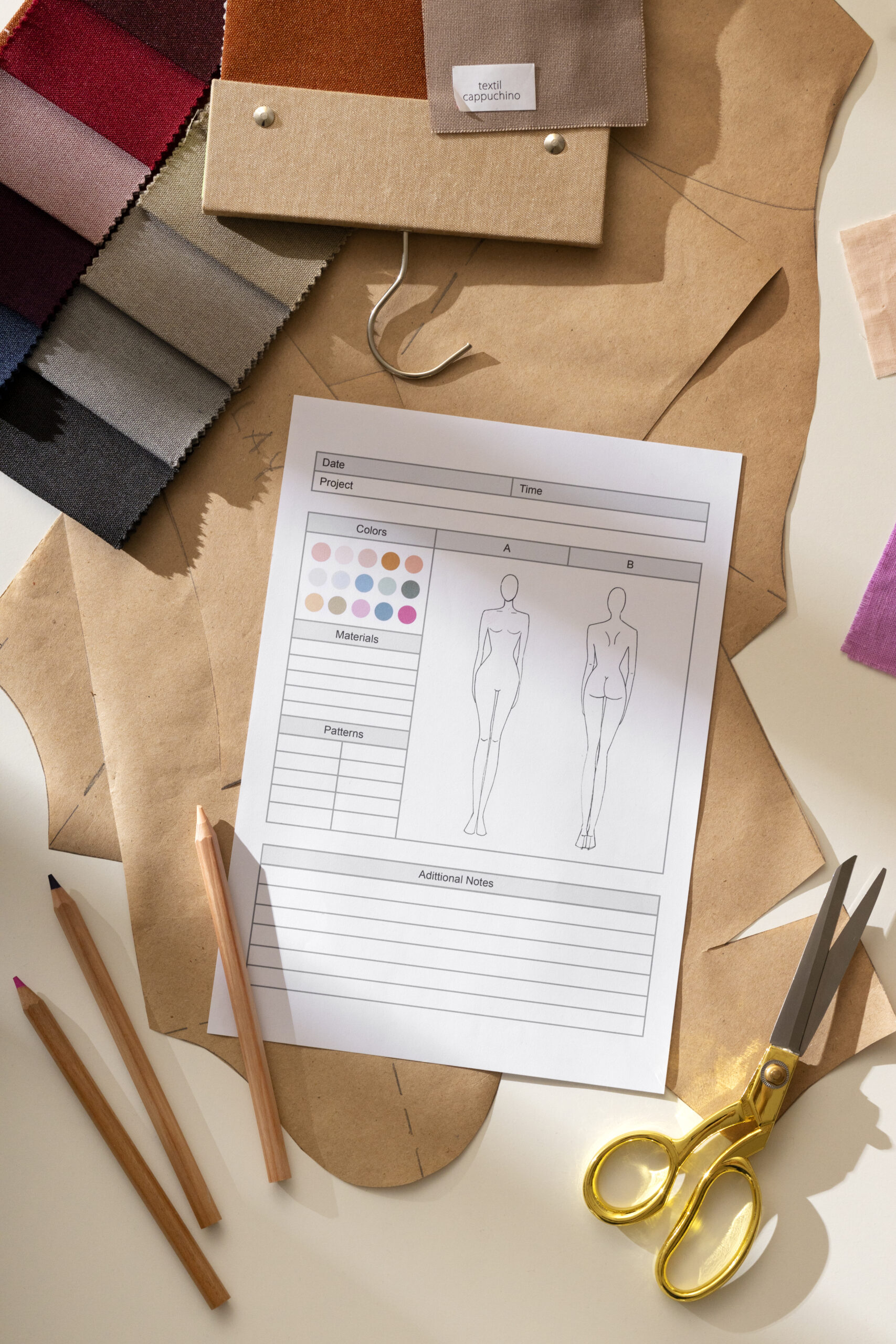
5 Easy Steps to Make a Clothing Size Chart
This guide offers several straightforward instructions to build a size chart that suits your brand requirements:
Determine Your Brand’s Sizing
- Start by determining the typical size and shape of those who will buy your products.
- Assess demographics, which include age groups, life habits, and physical structures.
- Call for industry-standard sizing research if applicable.
Identify Key Points of Measure (POMs)
- Complete a list of crucial body measurements, which should include shoulder size together with bust dimensions, waist measurements, and hip circumference.
- Determine which specific measurements will be needed to generate each garment type.
Select Your Size Range
- Choose which size options you will provide, either from XXS to 3XL or with basic S, M, and L choices.
- Although specific items may have alternative sizing measurements that adjust according to their design and fit.
Input Measurements in Your Template
- Insert your chosen measurements into the templates of internal and external size charts.
- Options exist to customize your template or access online free downloadable templates.
Add Additional Notes and Update Regularly
- Include an inches to cm conversion table and present any necessary guidelines for customers.
- You should add warnings to your product description that state the items could contract when laundered.
- The chart requires periodic updates through information collected from customers alongside trending pattern changes.
4 Free Tools to Create a Clothing Size Chart Online
Simplify your project by utilizing free online tools as well as free templates that are available at the following links:
Free Size Chart Templates: The website provides free downloadable templates for internal and external size charts, as well as garment size charts that users can customize.
Measuring Guides: Examples of measuring guides should include images that demonstrate proper measurement techniques.
Conversion Tools: The tool provides online converters that allow you to view measurements using both inches and centimeters.
Template Builders: The web-based tools named Template Builders enable anyone to build and modify size charts without training in the field of design.
These free resources provide immediate assistance when starting your size chart development and produce professional, user-friendly metrics.
Tips to Improve Your Size Chart for Better Conversions
- Alongside essential measurements, please select only the most significant ones that will matter to customers.
- Your users can learn proper measurement techniques through images and visual examples added to the document.
- Such charts must have an easy-to-read structure with headings and bullet points for organization.
- Your size chart should maintain readability when viewed by smartphone users.
- Make changes to your charts after each product update cycle and during the process of collecting customer input.
Common Mistakes to Avoid
- Too Many Details: Overloading the chart confuses customers. Keep it simple.
- Old Measurements: Update charts to match current trends and body types.
- Ignoring Feedback: Listen to customers. Fix fit issues based on their input.
- No Measuring Guide: Show how to measure correctly. It prevents errors.
- Inconsistent Sizing: Ensure all products follow the same size standards.
Final Thoughts
A good size chart helps customers find the right fit and trust your brand. It makes shopping easy and reduces returns. Keep your charts updated and simple. Listen to feedback and adjust when needed. A well-made size chart improves sales and customer satisfaction. Happy sizing!
FAQs on Size Charts
What if I’m between two sizes?
ANS: Pick the larger size for comfort. It will help you to wear really good quality clothes and be comfortable at the same time.
How do I measure myself correctly?
ANS: Use a tape and follow the guide. You can check on the internet about the correct way to use these tapes.
Why do sizes vary between brands?
ANS: Each brand follows a unique sizing chart. You need to find out those brands where you can spot fixed sizes.

Sandeep Tak
"It's a beautiful thing when a career and a passion come together..." With a post-graduation in International Trade & Finance, I’ve always been passionate about International Business. I spent 10 years in the corporate world, gaining hands-on experience in international logistics, documentation, procurement, and inventory management. This journey fueled my dream of entrepreneurship, and eventually led me to launch Curves & Hems Co.—a make-to-order garment manufacturing and export company. As Steve Jobs said, "The vision pulls you", and mine led me here.


Leave a Reply