

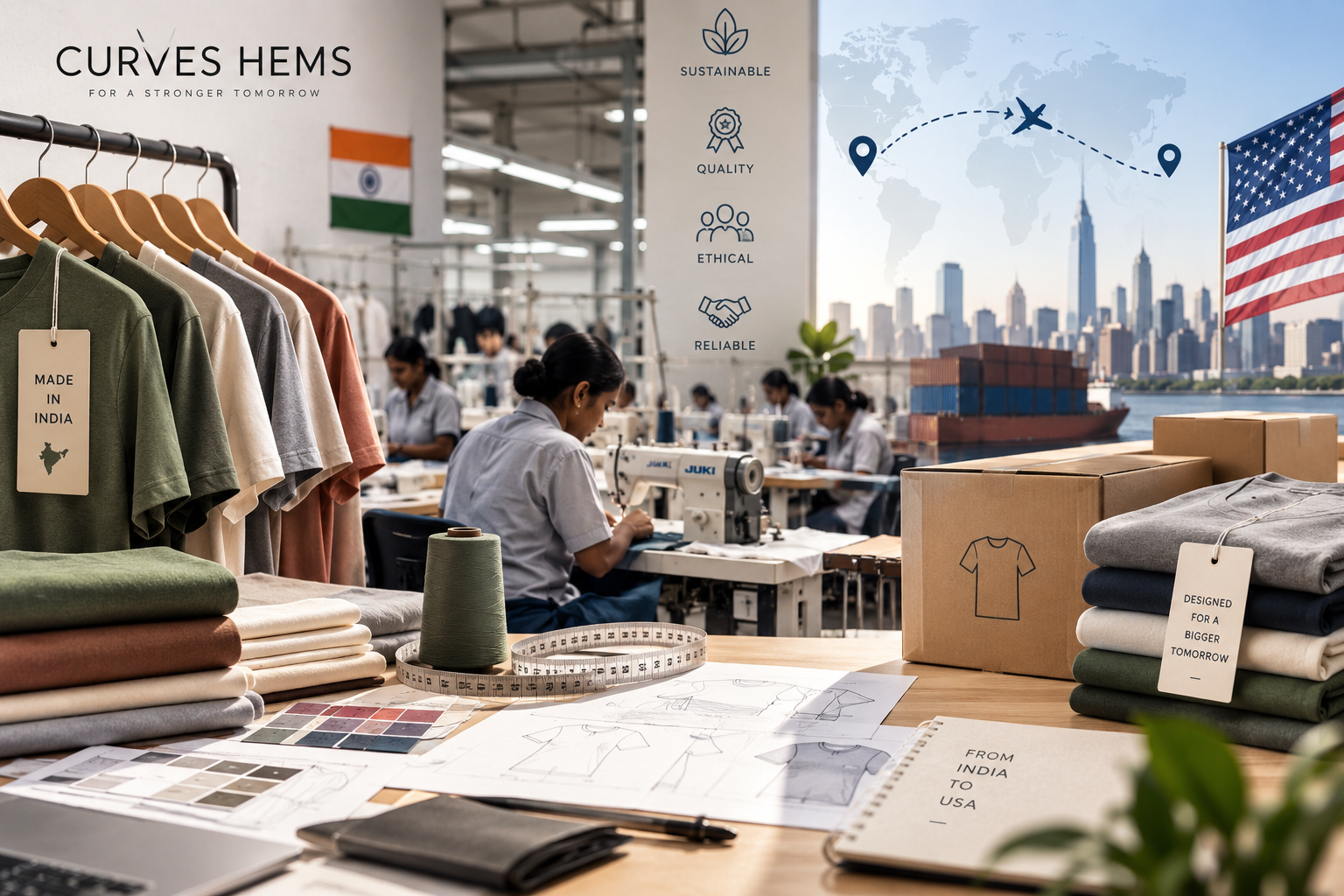
Clothing Manufacturing in India for US Brands: A Complete Sourcing Guide
India is one of the most established clothing manufacturing hubs for US brands, offering competitive pricing, a wide range of fabric and product specializations, and increasingly flexible minimum order quantities (MOQs) for private label and OEM/ODM production. The right manufacturer depends on your product category, order volume, and quality requirements — a factory built for 50,000-unit retail orders and a factory built for startup-friendly small batches are rarely the same one. This guide walks through what US brands specifically need to know before sourcing.
Why Do US Brands Source Clothing Manufacturing from India?
India has one of the world’s largest and most diversified textile and garment industries, with established export infrastructure serving brands across the US, UK, and Europe. For US brands specifically, the appeal comes down to a few consistent factors: competitive per-unit costs relative to domestic US manufacturing, a wide base of fabric options from cotton to technical performance materials, and manufacturing hubs with decades of export experience meeting US quality and compliance expectations. It’s also a market where private label and OEM/ODM production, manufacturing under a brand’s own label using a factory’s existing capabilities, has become increasingly accessible to smaller and emerging brands, not just large retailers.
What’s the Difference Between OEM and ODM Manufacturing?
OEM (Original Equipment Manufacturer) production means the brand supplies its own design and specifications, and the factory manufactures to that exact brief. ODM (Original Design Manufacturer) means the factory offers its own existing designs or patterns, which the brand can customize with its own branding, fabric choice, or minor adjustments. US brands just starting out often begin with ODM to move faster and test the market, then shift toward OEM as their product line and specifications mature.
What MOQs Should US Brands Expect from Indian Manufacturers?
Minimum order quantities vary significantly by manufacturer and product type. Large-scale exporters built for major retail accounts often require MOQs in the thousands of units per style, while manufacturers specializing in private label and startup-friendly production can offer MOQs as low as a few hundred pieces per style or even per color. For a new US brand testing a product line, it’s worth explicitly asking about per-style and per-color MOQs separately, since these can differ, and confirming whether a manufacturer’s stated MOQ is negotiable for a first order.
How Much Does Clothing Manufacturing in India Actually Cost?
Costs depend on four main factors: fabric choice and GSM (fabric weight), garment complexity (a basic t-shirt versus a structured jacket), decoration method (screen printing, embroidery, or digital printing), and order volume. As a general reference point, basic cotton t-shirts can range from a few dollars per unit at higher volumes to noticeably more for smaller runs or premium fabrics, though exact figures should always come from a manufacturer’s direct quote based on your specific tech pack rather than a general estimate. US brands should also factor in shipping, duties, and any sampling costs when comparing total landed cost, not just the per-unit factory price.
What Certifications Should US Brands Look for in an Indian Manufacturer?
For brands with sustainability or compliance commitments, relevant certifications to ask about include GOTS (Global Organic Textile Standard) for organic fiber content, OEKO-TEX for chemical safety in finished textiles, and Sedex/SMETA or BSCI for ethical labor and social compliance audits. Not every manufacturer holds every certification, and not every product category requires them, but for brands marketing sustainability or ethical sourcing claims to US consumers, working with a certified manufacturer provides documentation to back those claims rather than relying on general assurances.
How Do You Actually Find and Vet a Clothing Manufacturer in India?
A practical vetting process looks like this: define your product, target volume, and quality requirements clearly before reaching out to anyone. Build a shortlist of five to eight manufacturers through direct outreach, industry directories, or trade platforms. Request samples and a detailed quote based on your tech pack, not a generic price list. Ask specifically about their experience shipping to the US, since export documentation and compliance requirements differ by destination market. Where possible, request references from other US or Western brands they’ve worked with, and treat a manufacturer’s willingness to share this openly as a meaningful signal in itself.
Why Ajmer and Rajasthan Are Worth Considering for Sourcing
While Tirupur and Delhi NCR often dominate conversations about Indian garment manufacturing, Rajasthan including Ajmer has a long-standing textile and craft heritage and a growing base of manufacturers serving international private label and OEM/ODM clients. Curves & Hems, based in Ajmer, works with US and other international brands on private label and OEM/ODM garment production, including hoodies, t-shirts, and uniform categories, offering the kind of direct, specification-driven manufacturing relationship that smaller and emerging brands often struggle to get from India’s largest export-focused factories.
Frequently Asked Questions
Is it cheaper to manufacture clothing in India than in the US?
Generally yes, on a per-unit basis, largely due to lower labor and production costs. However, US brands should factor in shipping, import duties, and quality control processes when comparing total landed cost rather than comparing factory price alone.
What’s the minimum order quantity for private label clothing manufacturing in India?
It varies widely by manufacturer. Large exporters may require MOQs in the thousands of units, while manufacturers focused on private label and startup brands can offer MOQs of a few hundred pieces per style. Always confirm MOQ terms directly and ask whether they’re negotiable for a first order.
How long does clothing production typically take in India?
Production timelines commonly range from three to six weeks depending on order size, customization complexity, and whether sampling has already been finalized. Shipping time to the US should be planned separately and added on top of production time.
Do Indian manufacturers handle shipping to the US directly?
Many established manufacturers with export experience do handle or coordinate international shipping, including to the US, but this varies by manufacturer. It’s worth confirming a factory’s specific experience shipping to your target market and asking about their standard export documentation process before committing to an order.
Leave a Reply