

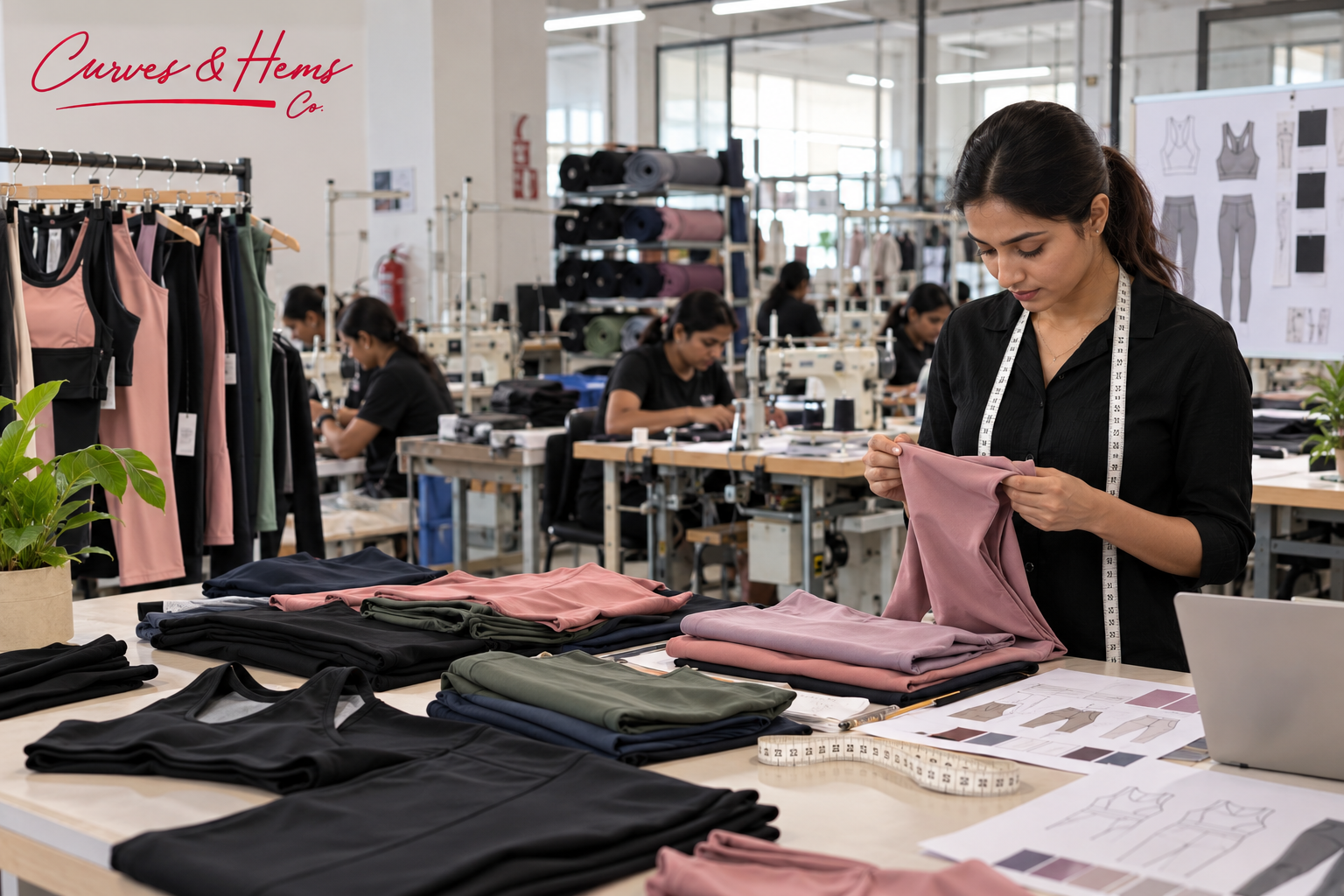
Activewear and Gym Wear Manufacturers in India: The Complete Sourcing Guide for Brands
India has become one of the most dependable sourcing destinations for fitness apparel. Global athleisure labels, D2C startups, gym chains, and sports clubs now look to the country for performance-ready garments at competitive prices. Whether you are launching your first leggings drop or scaling an established fitness label, choosing the right activewear and gym wear manufacturer in India decides your margins, your quality, and your brand reputation.
At Curves & Hems, we work with brands every day on exactly this challenge. This guide explains how the Indian activewear industry works, what to look for in a partner, and how to avoid the mistakes that cost new brands time and money.
Why India Is a Strong Base for Activewear and Gym Wear Manufacturing
India has a fully integrated textile value chain, from fibre and yarn to knitting, dyeing, cutting, stitching, and finishing. That matters for activewear because performance garments depend on tight control over fabric behaviour, stretch recovery, and colour fastness.
A few reasons brands choose India:
Integrated supply chain. Spinning, knitting, processing, and garment making often sit within the same region, which shortens lead times and reduces dependency on imports. The Government of India’s Ministry of Textiles regularly publishes information on schemes supporting the sector.
Established apparel clusters. Tiruppur is known for knitwear, while Ludhiana, Noida, Gurugram, Bengaluru, and Ahmedabad each contribute strengths in knits, wovens, and export-oriented production. The Apparel Export Promotion Council (AEPC) is a good starting point to understand the export ecosystem.
Flexible order sizes. Many Indian units accommodate small and medium runs, which suits emerging labels that cannot commit to massive volumes.
Skilled labour and technical know-how. Flatlock stitching, bonded seams, laser-cut finishes, and sublimation printing are now commonly available.
Competitive cost with improving compliance. Many factories now work with international social and environmental standards, which buyers increasingly expect.
Understanding the Activewear Supply Chain
Before you approach any manufacturer, it helps to know who does what. Many first-time founders mix these roles up, and it leads to confusion on pricing and responsibility.
Active wear vendors are the sourcing and supply partners who deliver finished garments, trims, or packaged ranges. Some are pure traders, some are factories, and some operate as full-service production houses. When evaluating active wear vendors, ask whether they own their cutting and stitching units or outsource them. Ownership usually means better quality control and more reliable deadlines.
Custom gym wear manufacturers build garments to your design. You supply the tech pack, or they help develop it, and they handle pattern making, sampling, bulk production, and finishing. This is the right route if you want your own fit, branding, and fabric choices.
Sportswear fabric suppliers sell the material itself, typically in rolls or by the metre, in a range of compositions and finishes. Brands that run their own cut-and-sew operations or who work with multiple stitching partners often buy directly from them.
A sportswear fabric manufacturer actually knits, weaves, dyes, and finishes the fabric. Dealing directly with a manufacturer rather than a reseller gives you better control over GSM, shade consistency, and technical finishes, and usually better pricing at volume.
Understanding these four roles helps you ask better questions and compare quotes fairly.
Choosing the Right Fabric: The Heart of Great Activewear
You can have flawless stitching and a brilliant design, and still lose customers if the fabric pills, goes transparent, or loses stretch after a few washes. Fabric is where activewear is won or lost.
Common fabrics used in gym wear
Polyester-spandex blends. The industry workhorse for leggings, sports bras, and tees. They offer stretch, quick drying, and good durability.
Nylon-spandex blends. Softer, smoother, and often used for premium, buttery-feel leggings. They typically cost more than polyester blends.
Recycled polyester and recycled nylon. Increasingly requested by brands building a sustainability story. Always ask for documentation before making environmental claims.
Cotton-rich and modal blends. Preferred for lifestyle and low-impact activewear where breathability and softness matter more than compression.
Moisture-wicking mesh and interlock knits. Useful for panels, training tees, and warm-climate collections.
What to check with your sportswear fabric suppliers
When speaking with sportswear fabric suppliers, request the following in writing:
- Fabric composition and GSM
- Four-way stretch percentage and recovery
- Shrinkage after wash
- Colour fastness to washing, rubbing, and perspiration
- Pilling resistance and abrasion results
- Opacity, especially for light colours and squat-proof leggings
- Certifications such as OEKO-TEX, GOTS for organic fibres, or bluesign where applicable
If you are working with a sportswear fabric manufacturer directly, ask for lab test reports and a lab dip or strike-off before approving bulk. Small checks here prevent expensive rejections later.
How to Evaluate Custom Gym Wear Manufacturers in India
Not every factory is the right match for every brand. Use this checklist when shortlisting custom gym wear manufacturers.
1. Specialisation in performance garments. A factory that mostly makes casual T-shirts may struggle with flatlock seams, gusset construction, and stretch-fabric handling. Ask to see activewear samples they have already produced.
2. Minimum order quantity (MOQ). MOQs vary widely by style, fabric, and print method. Be upfront about your volumes. If you are a startup, look for a partner open to small-batch production or phased orders.
3. Sampling process and timelines. A professional manufacturer will walk you through pattern making, first sample, fit sample, pre-production sample, and bulk approval. Clarify how many sample rounds are included and what each one costs.
4. Technical support. Good custom gym wear manufacturers help refine your tech pack, suggest fabric alternatives, and flag construction problems before they become costly.
5. Quality control systems. Ask about inline checks, final inspection, measurement audits, and how defects are handled.
6. Compliance and ethics. Responsible sourcing is no longer optional for many buyers. Ask about workplace standards, audit history, and any third-party certifications.
7. Communication and transparency. Slow or vague replies during enquiry usually mean slow and vague production. Prefer partners who communicate clearly from day one.
Customisation Options Brands Commonly Request
One advantage of working with Indian manufacturers is the range of customisation available:
- Custom fits and sizing, including inclusive and plus-size ranges
- Private labelling with woven labels, heat-transfer labels, and printed neck tags
- Sublimation, screen, and digital printing for all-over prints and team kits
- Embroidery and silicone badges for logos
- Technical trims such as reflective details, mesh panels, hidden pockets, and drawcords
- Custom packaging, polybags, hang tags, and barcode labelling
If you want to explore what a made-to-order range could look like for your brand, visit Curves & Hems and speak with the team about your concept.
A Simple Step-by-Step Process to Launch Your Activewear Line
- Define your customer and price point. Yoga studio crowd, serious lifters, or everyday athleisure buyers need different fabrics and fits.
- Build a tech pack. Include sketches, measurements, fabric specifications, stitch details, trims, and labelling.
- Shortlist active wear vendors and manufacturers. Request quotes from three to five and compare on quality, MOQ, and lead time, not price alone.
- Source and test fabric. Work with trusted sportswear fabric suppliers or a sportswear fabric manufacturer and confirm test results.
- Approve samples. Wear-test and wash-test every sample. Check seam strength, stretch recovery, and fit on real bodies.
- Place a bulk order. Confirm delivery dates, packing instructions, and quality standards in writing.
- Inspect before shipping. Pre-shipment inspection protects you from avoidable returns.
Common Mistakes to Avoid
Choosing on price alone. The cheapest quote often hides lower GSM fabric, weaker stitching, or missing finishing steps.
Skipping fabric testing. A beautiful swatch can behave very differently after fifty washes.
Ignoring fit across body types. Poor grading is one of the biggest reasons for activewear returns.
Underestimating lead times. Allow time for fabric sourcing, sampling revisions, and bulk production, especially around festive seasons and peak export periods.
Vague agreements. Put specifications, tolerances, and delivery terms in writing.
Why Brands Partner with Curves & Hems
At Curves & Hems, our focus is helping brands turn ideas into well-made garments. We support you through fabric selection, sampling, customisation, and production, so you are not juggling multiple disconnected contacts. Whether you need support finding reliable active wear vendors, want to develop a range with custom gym wear manufacturers, or need guidance on sportswear fabric suppliers and fabric quality, our team can help you plan a sensible path from concept to delivery.
Explore our work and get in touch at curveshems.com.
Frequently Asked Questions
What is the typical MOQ for activewear manufacturing in India?
It depends on the style, fabric, and print method. Some manufacturers work with small batches for new brands, while others require higher volumes. Always confirm MOQs per style and per colour.
How long does it take to produce custom gym wear?
Sampling and bulk production together usually take several weeks, depending on fabric availability, design complexity, and order size. Ask your manufacturer for a written timeline.
Should I buy fabric directly from a sportswear fabric manufacturer?
If you have consistent volumes and technical knowledge, yes. Direct sourcing gives better control over quality and cost. If you are starting out, a full-package manufacturer who handles fabric sourcing can reduce risk.
How do I know if a fabric is good enough for leggings?
Check GSM, opacity, stretch recovery, and pilling resistance, and request lab reports. Wear tests and wash tests are essential.
Can Indian manufacturers produce plus-size and inclusive activewear?
Yes, many can, provided the patterns are graded properly and fit-tested on the full size range.
Leave a Reply