Industrial & Safety Workwear Manufacturers in India: Coveralls, Boiler Suits & Factory Uniforms
If you run a factory, workshop, warehouse or construction site, your team’s clothing is not just a dress code. It protects your people from dirt, heat, oil and abrasion, keeps your brand visible, and makes your workplace look organized. Yet many buyers still choose workwear suppliers on price alone, then end up with seams that split in a month, fabric that fades after a few washes and sizes that never fit the whole team.
This guide explains how to choose industrial uniform manufacturers in India, what the main garment types are, which fabrics suit which jobs, and how to order factory uniforms in bulk without surprises. It is written for procurement heads, plant managers, HR and admin teams, and business owners who buy workwear regularly.
What Should You Look for in an Industrial Workwear Manufacturer in India?
What Should You Look for in an Industrial Workwear Manufacturer in India?
Look for a manufacturer that makes workwear in-house (not just resells it), offers fabric choices matched to your work environment, supports custom sizing and branding, has a clear minimum order quantity and delivers on schedule for repeat orders. Ask for fabric swatches and a pre-production sample before you approve a bulk order.
Industrial Workwear vs. Safety Workwear: Know the Difference
Buyers often use these terms interchangeably, but they are not the same, and the difference affects what you should order.
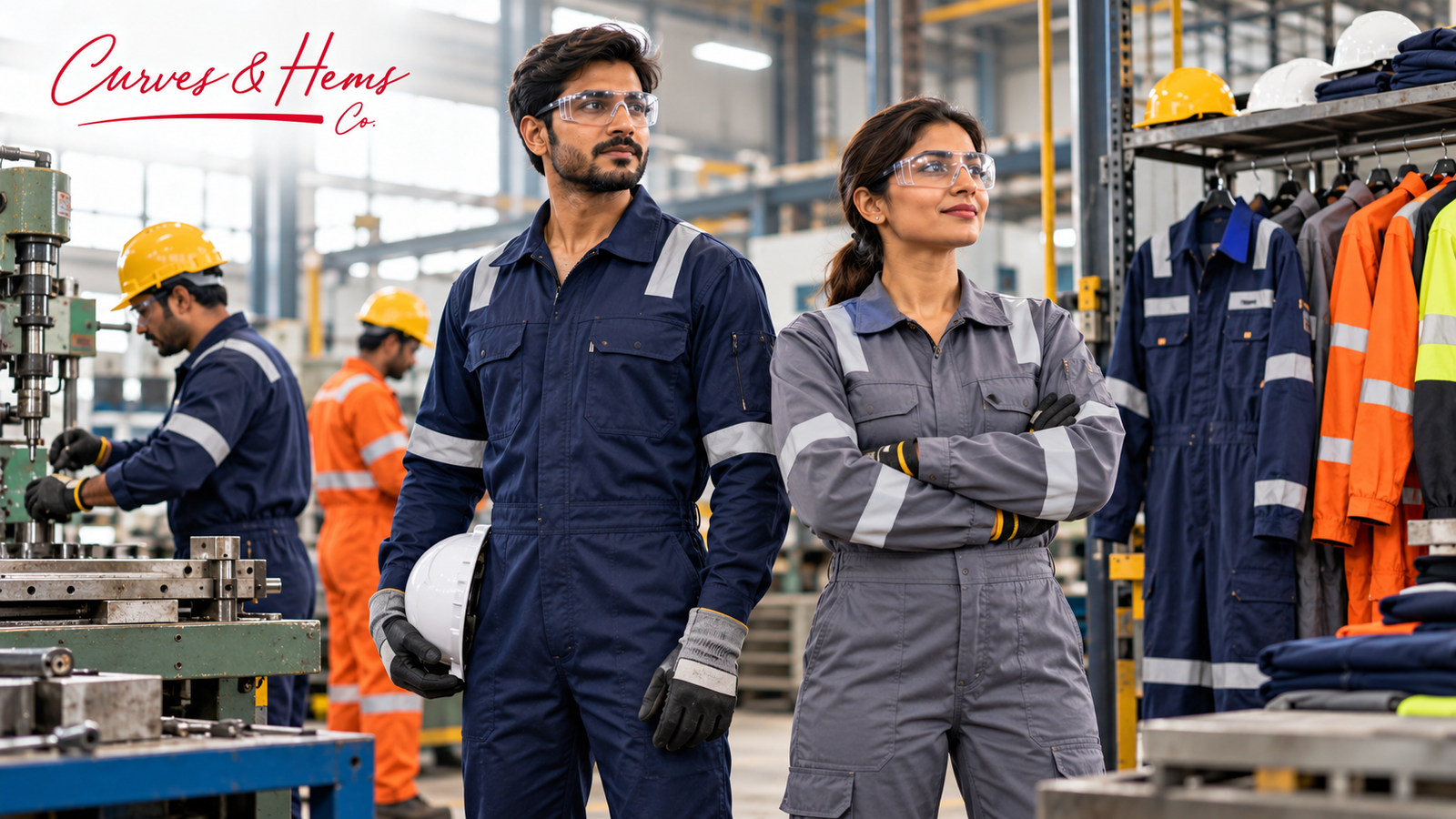
Industrial workwear is durable clothing for everyday factory and workshop conditions. It is built to handle repeated washing, movement and general wear. Coveralls, boiler suits, work shirts and trousers, and company-branded factory uniforms fall in this group.
Safety workwear goes a step further. It includes garments designed for specific hazards, such as high-visibility clothing for low-light areas, or flame-retardant and anti-static clothing for hazardous environments. These garments depend on certified fabrics and tested construction, not just on stitching quality.
If your site has regulated hazards, such as flammable materials, welding, live electrical work or heavy vehicle movement, check your safety officer’s requirements first and confirm what test reports or certifications the garment needs. A good manufacturer will tell you honestly what they can and cannot supply, instead of promising everything.
Types of Industrial Workwear Garments
Coveralls
A coverall is a one-piece garment that covers the torso, arms and legs. It is popular in manufacturing, automotive workshops, maintenance teams and cleaning services because it protects the wearer’s own clothes and keeps dust, oil and debris away from the skin. Useful features include a front zip or button placket, elasticated or adjustable cuffs, reinforced knees, multiple pockets and a back gusset for ease of movement.
Boiler Suits
A boiler suit is the classic one-piece working garment, usually in sturdy cotton or poly-cotton. The term is often used alongside coveralls, and in practice the two overlap. Boiler suits are common in engineering units, garages, plants and utility teams. Because they are a single piece, there is no gap between shirt and trousers, which helps in jobs involving bending, crawling or working under machinery.
Two-Piece Factory Uniforms
Many factories prefer a shirt and trouser set. It is easier to size, easier to replace in parts and more comfortable in hot conditions, since wearers can remove an outer layer. Two-piece factory uniforms also let you assign colors by department, for example one color for production, another for quality control and another for supervisors.
Work Jackets, Aprons and Hi-Vis Vests
Depending on the site, you may also need work jackets for cold stores or outdoor yards, aprons for workshops and food processing areas, and high-visibility vests for warehouses, loading bays and roadside work.
Choosing the Right Fabric for Your Work Environment
Fabric decides whether a uniform lasts six months or two years. Here is how to think about it.
Cotton is breathable and comfortable, which suits hot factory floors and long shifts. It absorbs sweat well but can shrink and wrinkle if the quality is poor.
Polyester-cotton blends are the most common choice for industrial uniforms. They hold color better, resist wrinkles, dry faster and survive frequent industrial laundering. A higher cotton share improves comfort, while a higher polyester share improves durability.
Drill and twill fabrics are heavier weaves that resist abrasion and tearing. They are widely used for coveralls and trousers in rough working conditions.
Specialty fabrics such as flame-retardant, anti-static or high-visibility materials are used for specific hazards. These need verified test documentation, so always ask for it before ordering.
A practical rule: match the fabric to the hardest task your team performs, not the average day. If a welder and a store clerk work at the same site, they should not wear the same garment.
Quality Checklist: What to Inspect Before You Place a Bulk Order
Before you approve any bulk order, check these points on the sample garment:
- Stitching: Look for even, close stitches, and reinforced stress points such as crotch, shoulders, pocket corners and knees.
- Seams: Double-stitched or overlocked seams last far longer than single-stitched ones.
- Zips and buttons: Heavy-duty zips and securely attached buttons matter more than they look. A failed zip makes a coverall useless.
- Colorfastness: Wash the sample several times and see whether the color bleeds or fades.
- Shrinkage: Check measurements before and after washing.
- Fit and movement: Have someone wear it and do real tasks: bending, reaching, squatting.
- Branding quality: Embroidery or print should stay sharp after washing.
Customization: Logos, Colors and Sizing
Good company uniform suppliers do more than cut and stitch. They help you build a uniform system:
- Logo placement through embroidery, screen printing or woven labels, usually on the chest, back or sleeve
- Department color coding so visitors and supervisors can identify teams quickly
- Name and designation patches for accountability
- Size ranges that cover your whole workforce, including very tall, broad or plus-size team members, who are often forgotten in standard size charts
- Gender-appropriate fits so women on the shop floor get garments cut for them, not scaled-down men’s wear
How to Order Bulk Factory Uniforms Without Problems
- Define the requirement: Number of employees, garment type, fabric, colors and branding.
- Collect accurate measurements: Most delivery problems come from wrong sizing. Take measurements or use a sample set for a size trial.
- Request fabric swatches and a sample: Approve the physical sample, not just a photo.
- Confirm minimum order quantity and lead time: Ask what happens if you need to reorder the same garment six months later.
- Plan for replenishment: New joiners, attrition and wear mean you will need ongoing supply. Pick a manufacturer who can match the same fabric and shade over time.
- Agree on quality checks and delivery terms: Put the specifications in writing.
Manufacturer vs. Trader: Why It Matters
When you search for “uniform suppliers near me” or “company uniform suppliers near me,” you will find a mix of manufacturers, traders and small tailoring shops. A trader buys from someone else and adds a margin, and may not control quality, timelines or fabric consistency. A manufacturer controls cutting, stitching, finishing and quality checks directly. That control is what keeps your reorders consistent, and it is the main advantage of working with true industrial uniform manufacturers.
Proximity still has value, because it makes sample approval, fitting sessions and urgent top-ups easier. The best approach is to shortlist manufacturers who can supply across India, and then weigh the trade-off between local convenience and production capability.
One Manufacturer for Every Team: Beyond the Factory Floor
Many companies find it easier to work with a single partner for all staff clothing. The same production capability that makes factory uniforms can also serve other groups: hospitality uniform suppliers for hotel teams, restaurant uniform suppliers for chefs and front-of-house staff, and corporate uniforms for office and field teams. Buying from one manufacturer keeps fabrics, colors and quality consistent across departments and simplifies reordering.
About Curves & Hems
Curves & Hems is a garment manufacturer based in Ajmer, Rajasthan, producing uniforms, hoodies, t-shirts and plus-size garments for businesses and brands. Our uniform work covers corporate, chef, medical and workwear categories, with custom branding, flexible order quantities and size ranges designed for real workforces.
For industrial and factory teams, we help you choose the right fabric and garment style for your working conditions, develop samples for approval and manufacture in bulk with consistent finishing. If your site has specific safety requirements, share them with us upfront so we can tell you clearly what we can supply and what needs certified specialty fabrics.
To get a quote: send us your garment type, estimated quantity, fabric preference, logo files and delivery location, and we will respond with sample and pricing options.
Frequently Asked Questions
What is the difference between a coverall and a boiler suit?
Both are one-piece garments that cover the body from shoulders to ankles. “Boiler suit” is the traditional term, usually for sturdy cotton or poly-cotton garments, while “coverall” is the more common modern term, often used for versions with extra features such as reinforced knees or elasticated cuffs. In practice, many suppliers use the terms interchangeably.
Which fabric is best for factory uniforms in India?
Polyester-cotton blends are the most popular choice, because they balance comfort, durability and color retention. For hot factory floors, a higher cotton share helps comfort. For heavy-duty work, drill or twill weaves hold up better.
What should I ask industrial uniform manufacturers before ordering?
Ask whether they manufacture in-house, what fabrics they offer, their minimum order quantity, lead time, sample policy, branding options and whether they can match the same fabric and color for future reorders.
How do I find reliable uniform suppliers near me?
Shortlist suppliers by checking whether they manufacture directly, ask for client references and fabric swatches, and approve a physical sample before a bulk order. Local presence helps with fittings and urgent orders, but production capability and consistency matter more.
Can one manufacturer supply factory, hotel and restaurant uniforms?
Yes. A manufacturer with strong stitching and customization capability can supply workwear, hospitality uniform and restaurant uniform requirements together, which keeps quality and branding consistent across departments.
Do workwear suppliers provide flame-retardant or high-visibility clothing?
Some do, but these garments rely on certified or tested fabrics. Ask the supplier for fabric test reports or certifications and confirm the requirement with your safety officer before ordering.
What is a typical minimum order quantity for factory uniforms?
It varies by manufacturer, fabric and customization. Some work with larger minimums, while others support smaller batches. Ask for the exact MOQ upfront and whether it applies per style, per color or per size.
How often should factory uniforms be replaced?
It depends on fabric, working conditions and washing frequency. Heavy-duty roles may need replacement sooner, while light-duty roles last longer. Plan for regular replenishment instead of waiting for a full replacement cycle.
Conclusion
Good workwear protects your people, reflects your brand and reduces replacement costs over time. When you compare workwear suppliers and industrial uniform manufacturers, look beyond the quote: check fabric quality, stitching, sizing range, customization and the supplier’s ability to reorder consistently. Work with a manufacturer who is honest about what they can supply, especially when safety requirements are involved.
Ready to equip your team? Contact Curves & Hems with your requirements for samples and a bulk quote.
Leave a Reply