

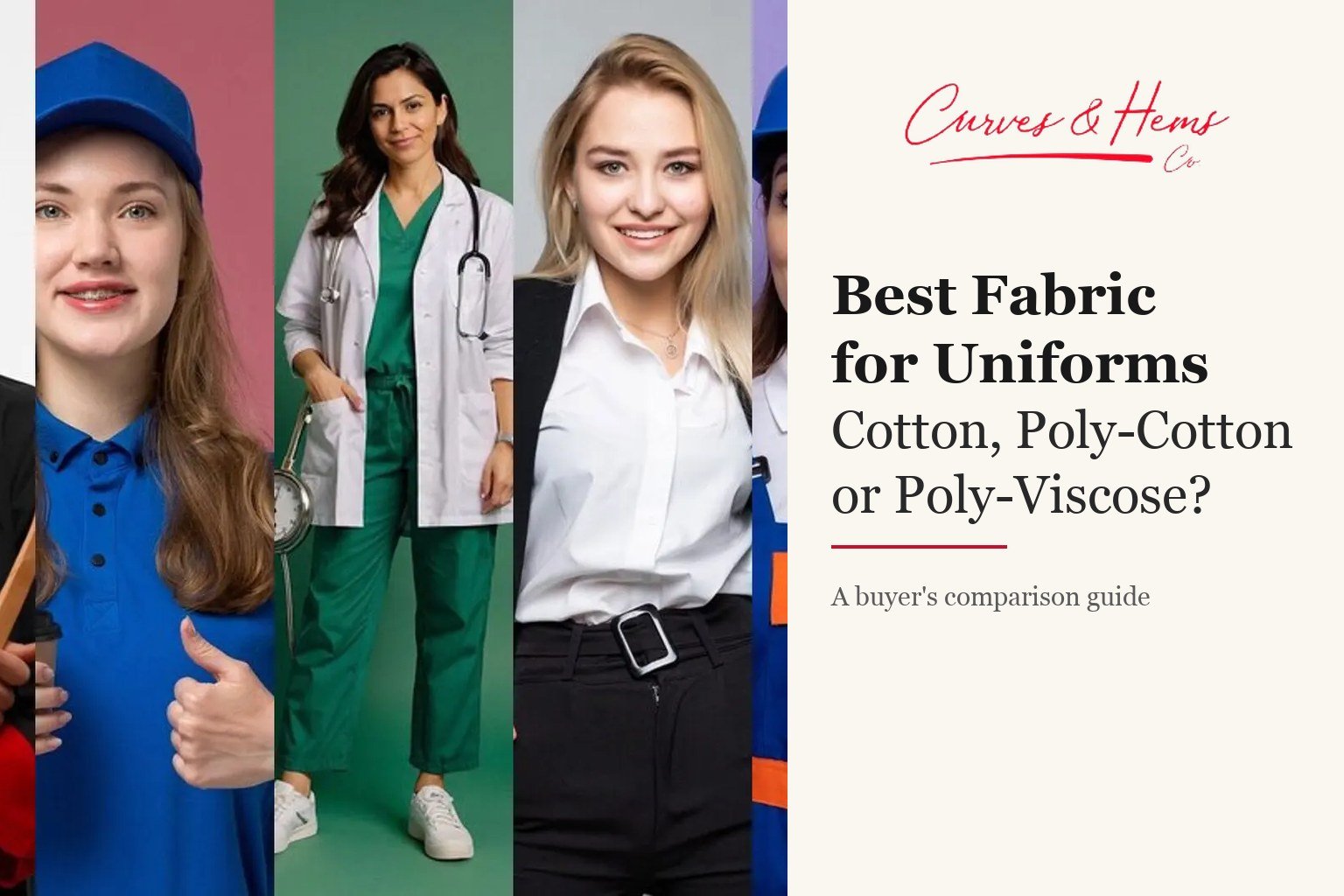
Best Fabric for Uniforms: Cotton vs Poly-Cotton vs Poly-Viscose
Quick answer: For most uniforms, poly-cotton (65/35 or 67/33) is the best all-round fabric for shirts and polos, poly-viscose (TR) is best for trousers, skirts and blazers, 100% cotton twill or drill suits kitchens and hot, low-risk work, and polyester or high-polyester blends suit heavy-duty and outdoor roles. Choose by job, climate and laundry method, then confirm with a wash test on a sample.
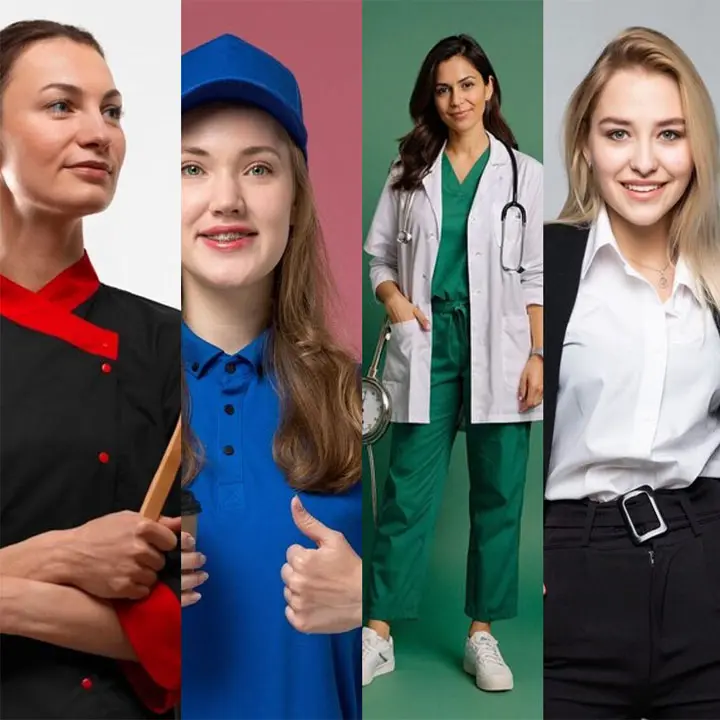
Two uniforms can look the same on day one and completely different after three months. The difference is almost always the fabric. The wrong choice means faded colours, shrunken shirts, shiny trousers and staff who quietly stop wearing the uniform.
This guide explains the main uniform fabrics used in India, compares them side by side, and shows which fabric to choose for corporate, hospitality, healthcare, school, security and industrial uniforms.
What makes a good uniform fabric?
A uniform fabric is judged on six things:
- Comfort: breathability and softness for 8–12 hour shifts.
- Durability: resistance to tearing, abrasion and pilling.
- Easy care: how well it resists creases and dries after washing.
- Colourfastness: whether the colour stays the same after repeated washing and sunlight.
- Shrinkage: whether it keeps its size after washing.
- Cost per wear: the price divided by how long it actually lasts.
No single fabric wins on all six, which is why most professional uniforms use different fabrics for different pieces.
Cotton vs poly-cotton vs poly-viscose vs polyester: comparison table
| Property | 100% Cotton | Poly-cotton (PC) | Poly-viscose (PV / TR) | 100% Polyester |
|---|---|---|---|---|
| Breathability | Excellent | Good | Good | Low (unless technical/wicking) |
| Crease resistance | Low | Good | Good | Excellent |
| Durability | Medium | High | Medium–High | Very high |
| Shrinkage | Higher (unless pre-shrunk) | Low | Low–Medium | Very low |
| Colour retention | Medium | Good | Good | Excellent |
| Feel and drape | Soft, natural | Crisp | Smooth, formal drape | Synthetic feel |
| Typical cost | Medium | Low–Medium | Medium | Low |
| Best for | Chef wear, hot climates, sensitive skin | Shirts, polos, school uniforms | Trousers, skirts, blazers, front-office suits | Workwear, sports, outdoor roles |
The main uniform fabrics explained
1. 100% cotton
Cotton is soft, breathable and absorbs sweat, which is why it remains popular in Indian summers and in kitchens. Its weak points are creasing and shrinkage. If you choose cotton, ask for pre-shrunk (sanforised) fabric and reactive dyes for better colour life. Our article on why cotton works in summer explains the science.
2. Poly-cotton (PC) blends
Poly-cotton combines cotton’s comfort with polyester’s strength. A 65% polyester / 35% cotton blend is the workhorse of uniform shirts in India: it resists creases, survives frequent washing and holds colour. A higher cotton share (for example 60% cotton / 40% polyester, often called CVC) feels softer and breathes better, at slightly lower durability.
3. Poly-viscose (PV), also called TR or terry rayon
Poly-viscose blends polyester with viscose, a fibre made from wood cellulose. It drapes well, feels smooth and looks formal, which makes it the standard choice for uniform trousers, skirts, waistcoats and blazers. A small amount of elastane (stretch) improves comfort for staff who move a lot.
4. 100% polyester and technical polyester
Polyester is strong, quick-drying and almost crease-free. Plain polyester can feel hot, but moisture-wicking polyester knits work well for sports, delivery and outdoor teams. Polyester is also required for sublimation printing.
5. Twill and drill (weave types)
Twill and drill are weaves, not fibres. They have a diagonal structure that makes the fabric heavier and more resistant to abrasion. Cotton or poly-cotton drill is common for chef coats, aprons, coveralls and security trousers.
6. Pique knit
Pique is the textured knit used for polo T-shirts. It hides sweat marks, keeps the collar shape and takes embroidery well. Read our full guide to custom polo T-shirts with logo for GSM and finishing options.
Which fabric should you choose for each type of uniform?
| Uniform | Top | Bottom / outer | Why |
|---|---|---|---|
| Corporate / office | Poly-cotton shirt or pique polo | Poly-viscose trousers, PV blazer | Sharp look all day, easy home washing |
| Hotel and hospitality | Poly-cotton shirt | Poly-viscose suits and waistcoats | Survives industrial laundry, keeps a premium drape |
| Chef and kitchen | Cotton or high-cotton drill chef coat | Cotton or PC drill pants, aprons | Heat comfort and absorbency near stoves |
| Medical scrubs and lab coats | Poly-cotton or poly-viscose-spandex scrubs | Poly-cotton lab coats | Withstands hot washes, soft for long shifts |
| School | Poly-cotton shirts, pique sports T-shirts | Poly-viscose trousers and skirts | Durable, low-iron, colour-stable |
| Security | Poly-cotton shirt | PC drill or PV trousers | Long outdoor shifts, frequent washing |
| Industrial workwear | Heavy cotton or poly-cotton drill coveralls; specialist treated fabrics where hazards require them | Abrasion resistance and protection | |
What GSM should uniform fabric be?
GSM (grams per square metre) tells you how heavy a fabric is. Heavier usually means more durable, but also warmer. Typical ranges:
- Shirts: about 100–140 GSM woven.
- Polo T-shirts: about 180–240 GSM pique.
- Trousers and skirts: about 180–280 GSM suiting.
- Chef coats and aprons: about 180–250 GSM drill or twill.
- Coveralls and heavy workwear: about 220–300+ GSM drill.
Our T-shirt manufacturing guide explains GSM in more detail.
How to test uniform fabric before you approve bulk
- Wash test: wash a sample 5 times the way your staff will. Check shrinkage, colour loss and puckered seams. Professional labs use standards such as ISO 6330 (domestic washing) and ISO 105-C06 (colour fastness to washing).
- Rub test: rub a white cloth firmly on dark fabric. Colour transfer means poor rubbing fastness, which stains collars and bags.
- Wear trial: give samples to two or three staff members for a week of real shifts.
- Composition check: ask for the exact blend and GSM in writing, and match the bulk fabric against the approved swatch.
Common fabric mistakes uniform buyers make
- Choosing pure polyester shirts for hot, non-air-conditioned workplaces.
- Using cotton trousers that bag at the knees and crease within an hour.
- Choosing very dark or bright shades without checking colourfastness.
- Comparing quotes without comparing GSM and blend. A cheaper quote often means lighter fabric.
- Skipping the sample stage. Fabric that looks good on a swatch can behave very differently as a finished garment.
How Curves & Hems helps you choose the right fabric
Curves & Hems is a made-to-order uniform manufacturer in Ajmer, Rajasthan. We source fabric from established mills, recommend blends by job role and climate, and make a sample for your approval before any bulk production. We produce corporate, hospitality, chef, medical, school, security and industrial uniforms, with MOQs starting at 25 pieces per style on stock fabrics.
Not sure which fabric suits your team?
Tell us the job role, climate and quantity, and we will recommend a fabric and send a sample. Get a fabric recommendation and quote or call +91 73000 39470.
Frequently Asked Questions
Which fabric is best for uniforms in India?
Poly-cotton (65/35) is the best all-round choice for uniform shirts and polos in India because it balances comfort, durability and easy care. Poly-viscose is better for trousers, skirts and blazers, and cotton is better for kitchens and very hot conditions.
Is poly-cotton better than 100% cotton for uniforms?
For most uniforms, yes. Poly-cotton creases less, shrinks less, dries faster and lasts longer under frequent washing. Pure cotton is more breathable and softer, so it is preferred for chef wear and hot, low-activity roles.
What is TR fabric in uniforms?
TR stands for terylene-rayon, the trade name for poly-viscose. It is a blend of polyester and viscose with a smooth feel and good drape, widely used for uniform trousers, skirts and blazers.
Which fabric does not shrink after washing?
Polyester and high-polyester blends shrink the least. Cotton shrinks more unless it is pre-shrunk (sanforised). Always wash-test a sample before approving bulk production.
What is the best fabric for uniforms in hot weather?
Breathable fabrics such as 100% cotton, high-cotton blends or moisture-wicking polyester knits work best in hot weather. Lighter GSM and lighter colours also help.