

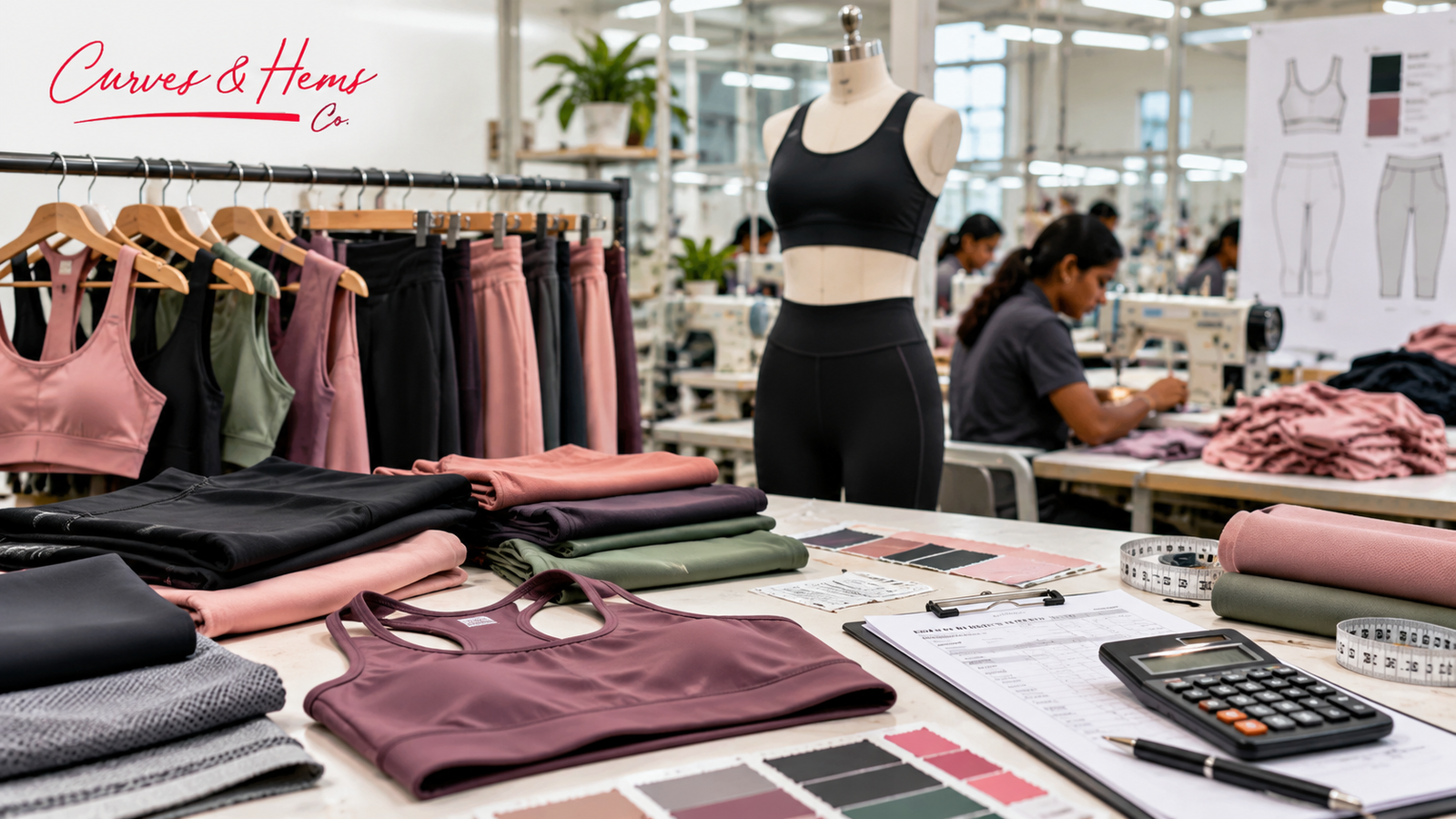
How Much Does It Cost to Manufacture Activewear in India?
The cost to manufacture activewear in India depends on the product, fabric, stitching, branding, and order quantity. Simple gym tees sit at the lower end, while premium nylon-spandex leggings, jackets, and heavily customised styles sit at the higher end. Sampling, labels, and packaging are usually charged on top of the per-piece price.
There is no single fixed rate, because every design is different. Always request a written quote based on your own specifications. At Curves & Hems, we share a clear cost breakdown before you commit to bulk production.
How Cost Changes by Product Type
Different products need different amounts of fabric, labour, and trims, so their costs vary.
Gym T-shirts and tank tops are usually the most affordable to manufacture. They have fewer seams, use less fabric, and need less finishing time.
Shorts and cycling shorts cost slightly more, because they often include lining, pockets, and stretch fabric with elastic waistbands.
Sports bras are more detailed than they look. Padding, multiple panels, elastic, and careful finishing all add to the cost.
Leggings vary widely. Polyester-spandex leggings are the cost-friendly option, while nylon-spandex leggings with a soft, premium feel cost more because of the fabric quality and finish.
Joggers and track pants use more fabric and often include pockets, cuffs, and drawcords, which raises the price.
Hoodies and jackets are usually the most expensive, because they need heavier fabric, zips, lining, and more complex construction.
The 8 Factors That Decide Your Activewear Manufacturing Cost
1. Fabric (usually the biggest cost)
Fabric is typically the largest share of the cost of any garment. A basic polyester-spandex knit costs far less than a soft nylon-spandex or a recycled performance fabric. Higher GSM also means more material per garment, and that raises the price.
Buying from reliable sportswear fabric suppliers or directly from a sportswear fabric manufacturer can help you control this cost, especially at higher volumes.
2. Style complexity
A simple tee with two seams costs less than a sports bra with multiple panels, padding, and elastic finishing. More panels mean more cutting, more stitching, and more time on the line.
3. Stitching and construction
Flatlock seams, bonded seams, and reinforced stress points improve comfort and durability, and they add labour time. Cheap overlock-only finishes can cut cost but may reduce quality in performance wear.
4. Order quantity
Larger orders lower your cost per piece because fabric buying, cutting, and setup are spread across more garments. Very small runs usually cost more per piece.
5. Printing, embroidery, and branding
Your logo and design add cost. Common options include:
- Screen printing
- Heat transfer
- Sublimation (all-over prints)
- Embroidery
- Silicone badges and reflective details
All-over sublimation usually costs more than a single small chest logo.
6. Trims and accessories
Zips, drawcords, elastic, padding cups, mesh panels, and reflective tapes all add to the price. Technical trims cost more than basic ones.
7. Labels, tags, and packaging
Woven labels, care labels, hang tags, polybags, and custom boxes are small items, but they add up across a large order.
8. Sampling and development
Sampling is usually charged separately, because it involves pattern making, fabric, and tailoring time for one or a few pieces. Expect a development cost per style, plus extra if you need several revisions.
Cost Breakdown: Where Does Your Money Go?
For most activewear, the budget splits across a few main areas.
Fabric is the largest share. Cutting and stitching labour is usually the second largest. After that come trims and accessories, printing or embroidery (which varies with your design), labels and packaging, and quality control and finishing. The manufacturer’s margin and overheads are included in the final quoted price.
Knowing this helps you negotiate smartly. Cutting fabric quality to save money usually hurts you more than it helps, because returns and bad reviews cost more than the saving.
Sampling Cost: What to Expect
Sampling is where many first-time brands get surprised. Ask about these points up front:
- Cost per sample (often higher than the per-piece bulk price)
- Number of sample rounds included
- Cost of extra revisions
- Whether sample fees are adjusted against your bulk order
- Timeline per sample round
A professional manufacturer explains this clearly before you start. If you are planning a branded range, our guide to private label activewear manufacturers in India explains the full sampling process step by step.
MOQ and Pricing: How Quantity Changes Your Cost
MOQs (minimum order quantities) are usually set per style and per colour. As a general rule:
- Small batches: higher cost per piece, lower upfront investment
- Medium batches: balanced pricing, a good starting point for growing brands
- Large batches: the lowest cost per piece, but a higher cash commitment
If you are a startup, look for custom gym wear manufacturers open to small-batch or phased orders, so you can test the market before scaling up.
Hidden Costs Many Brands Forget
Beyond the per-piece price, budget for these:
- Sampling and revision charges
- Lab testing for fabric quality
- Shipping and freight (domestic or international)
- GST and import or export duties, where applicable
- Photography and marketing samples
- Quality inspection before dispatch
- Returns, exchanges, and wastage allowance
- Extra charges for rush orders or last-minute changes
Planning for these early keeps your margins healthy.
9 Smart Ways to Reduce Activewear Manufacturing Cost
- Start with fewer styles. Fewer styles mean better pricing on each one.
- Use shared fabrics across styles. Using one fabric in several products increases fabric order size and can improve pricing.
- Simplify designs. Fewer panels and trims reduce labour time.
- Choose the right fabric, not the most expensive one. Match fabric to your customer and price point.
- Order in realistic quantities. Moderate volumes improve per-piece pricing without tying up too much cash.
- Standardise colours. Fewer colours mean easier fabric dyeing and cutting.
- Finalise your tech pack before sampling. Fewer design changes mean fewer sample rounds.
- Plan ahead. Rush orders usually cost more.
- Build a long-term relationship with one manufacturer. Repeat orders often earn better terms.
Cheap vs Smart: Why the Lowest Quote Is Not Always Best
A very low quote can hide:
- Lower GSM or thinner fabric
- Weaker stitching and seam quality
- Poor stretch recovery
- Colours that fade or bleed
- Missing finishing steps
- Inconsistent sizing
When compared with returns, refunds, and lost customers, the cheapest option often costs more in the long run. Compare quotes on fabric spec, construction, finishing, and lead time, not on price alone.
How to Get an Accurate Activewear Quote
Share the following with your manufacturer, so you get a quote you can rely on:
- Product type and number of styles
- Reference images or tech pack
- Preferred fabric and GSM (or let the team advise)
- Quantity per style and per colour
- Size range, including plus sizes if needed
- Branding needs: labels, prints, tags, packaging
- Target launch date
Clear information means faster, more accurate pricing.
Get a Clear Quote from Curves & Hems
At Curves & Hems, we help brands plan realistic budgets, choose the right fabric for their price point, and move from sample to bulk production without surprises.
Ready to get your numbers?
- Send your product list and target quantity
- Share your design or reference images
- Receive a transparent quote and sampling plan
Request a Quote at Curves & Hems
Frequently Asked Questions
How much does it cost to make a pair of leggings in India?
Polyester-spandex leggings generally cost less to make than nylon-spandex leggings. The final price depends on the fabric GSM, waistband design, stitching type, branding, and order size. A manufacturer can give you an exact quote after seeing your specifications.
What is the cheapest activewear product to manufacture?
Basic gym T-shirts and tank tops are usually the most affordable, because they have fewer seams and use less fabric than leggings, jackets, or hoodies.
Why is activewear more expensive to manufacture than regular clothing?
Activewear needs stretch fabrics, specialised stitching such as flatlock seams, and stricter quality testing for stretch recovery, opacity, and colour fastness. These add material and labour cost.
How much does sampling cost for activewear?
Sampling is usually charged per style and often costs more per piece than bulk production. Ask how many revisions are included and whether the sample fee is adjusted against your bulk order.
Does a higher order quantity reduce activewear cost?
Yes. Larger quantities spread fabric purchasing, cutting, and setup costs across more garments, which usually lowers the cost per piece.
What is the minimum order quantity for activewear in India?
MOQs vary by manufacturer, style, and fabric, and are typically set per style and per colour. Confirm the MOQ in writing before you start.
Is it cheaper to manufacture activewear in India than in other countries?
India offers competitive pricing, an integrated textile supply chain, and flexible order sizes, which makes it attractive for many brands. Actual savings depend on the product, fabric, and destination market.
How can I reduce my activewear manufacturing cost without losing quality?
Start with fewer styles, simplify designs, share fabrics across products, finalise your tech pack before sampling, and order realistic quantities.
Leave a Reply