Screen Printing vs DTG vs DTF vs Sublimation for Brands
Published: 25 November 2026 · By Riya Agarwal
Screen printing suits a repeated design with a few solid colours, while direct-to-garment (DTG) is a good starting point for detailed artwork on a short run of cotton T-shirts. Try direct-to-film (DTF) for a multicolour design across different fabrics, or dye sublimation for artwork that should feel like part of a white or light polyester garment. Choose on the actual fabric, at the size your customer will wear.
Which printing method suits my fabric and order?
Imagine the same drawing going on a souvenir tee, a staff polo and a running vest. The fine lettering matters on the tee. On the polo you might care more about matching a brand colour. And on the vest, the runner has to wear the whole back print against moving fabric. Give the printer that context along with the artwork.
| Method | Fabric to start with | Order and artwork | What to feel on the sample |
|---|---|---|---|
| Screen | Cotton tees or a blend matched to the ink | Repeat batches of the same spot-colour design. Each ink separation needs a screen. | The ink deposit. Compare the solid fill with an unprinted part. |
| DTG | Cotton or cotton-rich jersey | Short runs, photos and shaded illustrations. Colours print from a digital file. | Usually soft. Check the feel where white ink sits under a dark-shirt print. |
| DTF | Cotton, polyester or blends suitable for the transfer | Small batches, mixed designs or repeat logos. Each garment needs an application. | A layer on the surface. Judge a back graphic at its full width. |
| Sublimation | White or light polyester | Individual jerseys through to printed fabric for larger runs. Well suited to gradients. | The dyed area keeps the feel of the cloth. |
When does screen printing become worth the setup?
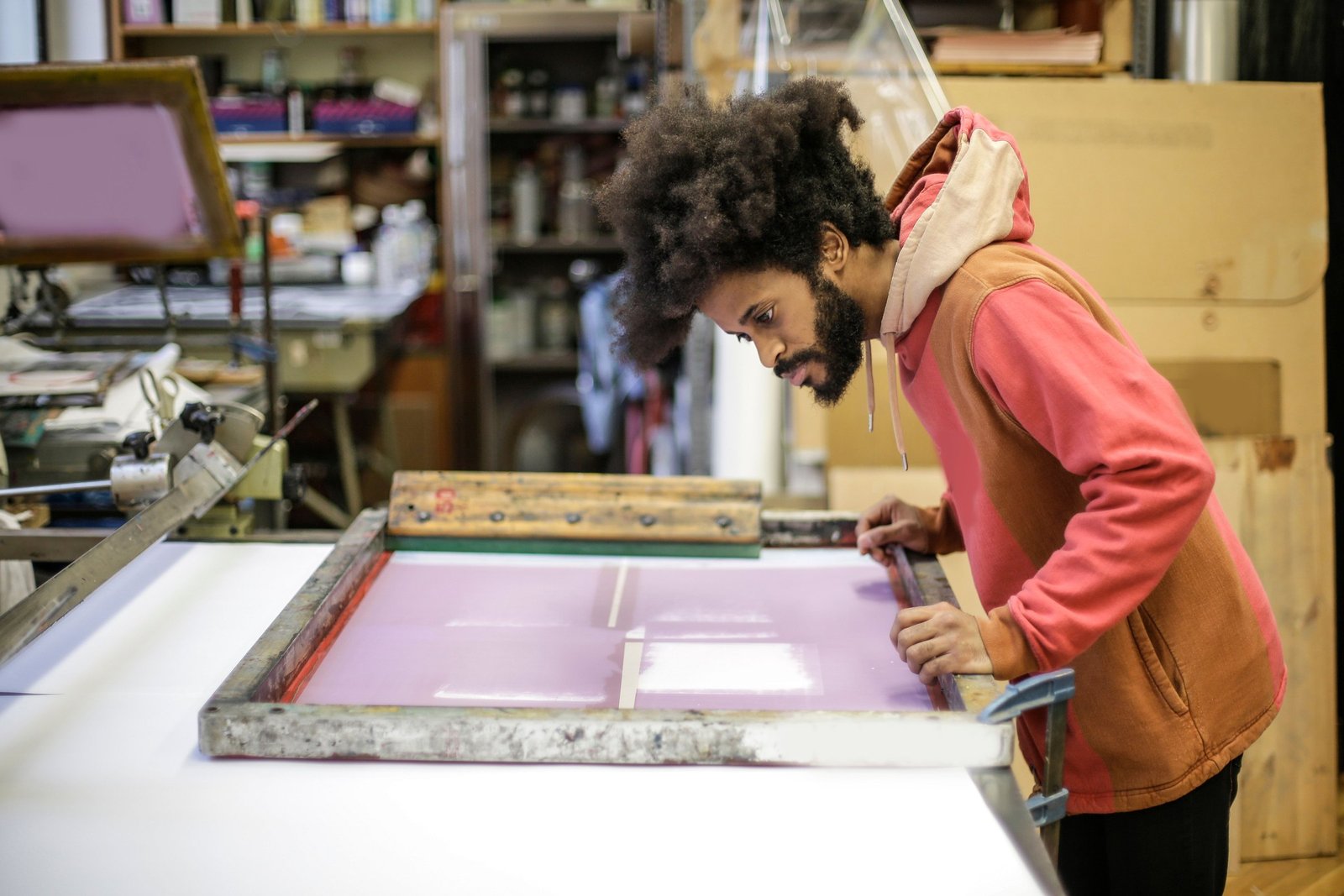
Think of each screen as a stencil. The printer pushes ink through the open parts of the mesh onto the shirt, then cures the print. For a navy wordmark and a red underline, each ink needs its own screen. The printer also lines up the screens so the underline lands where the artist drew it. Ask whether the chosen shirt colour calls for a white base and whether that is included in the setup.
That preparation makes sense when the press can keep printing the same design. Count the shirts that share the artwork at the same dimensions and position. A purchase order can look large until you split it into different back designs, sleeve marks and child-sized versions. Ask for a quote using the breakdown you intend to order. For a repeat, ask which setup charges apply again if the artwork stays the same.
The practical colour limit depends on what the printer can separate and reproduce on its press at your quantity. A solid wordmark is a straightforward brief. A portrait built from dots needs a printer who can show you a comparable result. For a particular shade of red, supply a physical colour reference and approve the ink on the actual shirt.
How do DTG and DTF compare on a T-shirt?
With DTG, the printer lays ink directly onto the garment and fixes it with heat. It can reproduce a pencil drawing with shaded edges without preparing a screen for each tone. A cotton-rich tee is a sensible first sample. On a dark tee the printer will commonly lay down white ink first so the colours show. The pretreatment used with white ink is part of the process you are approving, along with the artwork.
DTF starts with a film. The printer prints the image onto it, applies adhesive powder and uses heat to transfer the design to the garment. The graphic sits on top of the fabric. That gives you another option when your order includes both cotton and polyester. Send both fabrics for testing, even if the logo and garment colour are identical.
For a choice between the two, lay the samples across your forearm and bend the cloth where the design sits. A small DTF chest mark may feel perfectly comfortable. Make that mark into a large solid rectangle and your customer will feel a much larger area of transfer. If the artwork allows it, try a version with some cloth showing through and compare it with the solid version before changing methods.
Neither digital process needs the set of colour screens used on a press. There is still work on each piece. With DTG, ask for the price on your chosen garment colour and print dimensions. With DTF, specify the transfer size and how many positions need pressing. A quote for a front emblem tells you little about the price of the same tee with a back print as well.
Can I use sublimation on dark shirts or cotton?
For conventional garment sublimation, start with white or light polyester. Heat moves dye from the printed transfer paper into the polyester. The process has no white ink. A white part of your drawing takes its colour from the fabric, so a white number designed for a white jersey will pick up a pale yellow base if you switch blanks. Dark cotton is a good reason to change the printing method.
This is where sublimation earns its place on sportswear. A pattern can cover a wide panel without leaving a transfer layer that could lift at the edge. For an all-over jersey, ask for the panel shapes the printer will use before placing the artwork. Keep the club name clear of the seam and ask to see a sewn sample. A flat piece of printed fabric can settle a colour decision while leaving the position of a side stripe unresolved.
Ask for separate quotes for a personalised jersey and for fabric printed for a whole run. In the second case, establish who cuts and sews the printed panels. State whether the back names and numbers change between shirts. That gives the supplier a chance to price the actual order and gives you a way to check the names against the finished garments.
How do I check wash durability and choose the final finish?
Ask for the care instructions for the finished sample. Keep an unwashed reference. Photograph the printed area, wash and dry the sample as instructed, then compare the colour, the edges and the feel against the reference. Pay attention to the smallest lettering and to places where the garment bends in wear. If a transfer edge lifts or the screen print cracks, send the printer a close photograph and the wash conditions before approving bulk.
Embroidery is worth sampling for a polo crest or an initial on a cuff. The artwork is converted into a stitch file and reproduced in thread, which gives the mark a raised texture. Fine type may need thicker strokes to stay legible. Ask for a stitched sample on the garment fabric, inspect the reverse where it touches skin and check that the cloth lies flat around the mark.
For a custom printing quote from a clothing manufacturer in India, send the fibre composition, garment colour, artwork at final size, position and quantity for each version. Add the thing you care about most, such as a soft back print or a close colour match. You can record the dimensions in a tech pack. If you are still choosing the base tee, the T-shirt fabric and sampling guide can help you brief that part of the order.
Frequently asked questions
What is the best way to print a photograph on a cotton tee?
Start with a DTG sample at the intended print size. Pick a part of the photograph with subtle shading, such as a face, and inspect it on the actual garment colour before you approve the run.
Can I order the same DTF logo on a tee and a hoodie?
Ask the printer to test the transfer on both garments. Check the feel on the tee as well as the edges on the hoodie, and give a placement reference for each garment.
Which T-shirt print lasts longest in the wash?
The method alone cannot tell you how your shirt will perform. Ask for a decorated sample and follow its intended care routine. Agree with the printer on what change in colour or adhesion would make you reject it.
How many shirts do I need for screen printing to cost less?
Compare itemised quotes at your own batch sizes. Include screen preparation, the print on each piece and any extra positions. The break-even quantity changes when the design or the number of screens changes.
How do I keep white lettering on a sublimated jersey?
Start with white polyester and leave the lettering area undyed in the design. Ask to see the lettering on a printed panel, especially if fine spaces separate it from a dark background.
Send Curves & Hems your artwork and a note about how the garment will be worn. Ask for a sample or quote on the combination you want to test.
Sources: ScreenPrinting.com printing guide, Brother on screen printing and DTG, Epson on DTG and film transfers, Epson on sublimation, Printful embroidery specifications. Checked 25 November 2026.

Leave a Reply